The Strategic Impact of Ramadan Shopping Sale Illustrations in Modern Design
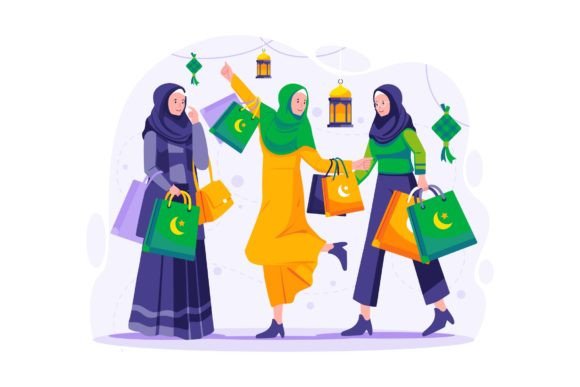
In the confluence of cultural celebration, digital commerce, and visual communication, a specific genre of design has emerged as a powerful tool: the Ramadan Shopping Sale Illustration. These are not mere decorative graphics; they are purpose-built visual narratives that depict scenes such as happy young women with shopping bags during a Ramadan Sale, often combined with typography for Ramadan Kareem and Eid Mubarak. As vector illustrations compatible with formats like AI, EPS, SVG, and PNG 300 DPI, they serve as versatile assets for desktop web, mobile web, landing pages, hero images, and banners. Their creation marks a significant point where cultural authenticity meets commercial design, addressing the evolving needs of a global digital marketplace.
Understanding the Ramadan Shopping Sale Illustration
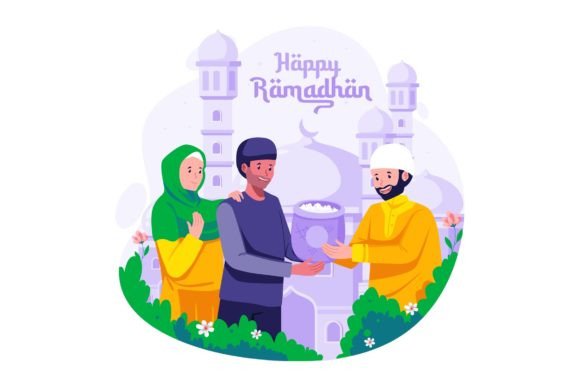
A Ramadan Shopping Sale Illustration is a curated vector artwork that typically integrates several key elements. It visualizes the act of shopping—often portraying Muslim women in contemporary, joyful settings—directly linking the spiritual and reflective period of Ramadan with the anticipated consumer activity leading to Eid. The design frequently includes celebratory greetings and is conceptualized for e-commerce and online shopping themes. This specificity transforms it from a generic sale banner into a culturally resonant communication piece. The technical offering, including easy-to-customize flat design files compatible with Adobe Illustrator, makes it a practical resource for professionals who need to execute campaigns rapidly without sacrificing cultural nuance or visual quality.
Cultural Resonance as a Design Imperative
The relevance of these illustrations stems from a broader industry trend towards inclusive and culturally specific marketing. Global brands and local entrepreneurs alike are recognizing that consumer engagement deepens when visual communication acknowledges religious and cultural contexts. A generic “Sale” banner lacks connection; a scene depicting shopping during Ramadan carries implicit understanding and respect. This aligns with larger developments in consumer expectations, where audiences seek authenticity and representation. For the Muslim community, especially, seeing oneself reflected in commercial imagery—happy, engaged, and modern—is a significant shift from past marketing approaches that often overlooked these demographics or used stereotypical imagery.
Integration into Market and Creative Trends
The Ramadan Shopping Sale Illustration sits at the intersection of several powerful trends. Firstly, the explosive growth of e-commerce in regions with significant Muslim populations has created a demand for tailored visual assets. During Ramadan and Eid, online shopping activity surges, with consumers purchasing gifts, clothing, food, and home decor. Illustrations that visually encapsulate this online shopping concept provide an immediate, recognizable hook for landing pages and social media ads.
Secondly, within the creative industry, there is a move towards ready-to-use, high-quality vector assets that allow for scalability and adaptation. Designers, marketers, and freelancers operate in fast-paced environments. Access to a well-crafted illustration file (EPS 10, SVG, PDF) that can be easily edited for color, text, or composition supports efficient workflow without requiring custom illustration from scratch. This practicality is crucial for meeting tight campaign deadlines around specific calendar events.
Furthermore, the flat design style common in these illustrations aligns with contemporary web and UI design principles, ensuring they integrate seamlessly into digital products without appearing dated or overly complex.
Why Professionals Are Paying Attention
The attention from professionals—marketers, creators, entrepreneurs—is driven by tangible business and communication needs. Using a culturally apt illustration is no longer just a “nice touch”; it’s a strategic decision that can impact conversion rates and brand perception. For instance, a landing page using a Ramadan-specific shopping scene as its hero image can significantly reduce the cognitive distance for the target audience, making the call-to-action feel more relevant and trustworthy.
Observations from successful campaigns show that imagery which mirrors the audience’s real-life celebrations and activities fosters a stronger emotional connection. This is particularly important during Ramadan, a period imbued with deep spiritual and social meaning. The illustration acts as a visual shorthand that communicates, “This offer is for you, during your celebration.”
Changing Needs and Practical Applications
The expectations of both designers and clients have evolved. There is a growing need for design resources that are:
- Contextually Flexible: An illustration that works across desktop web, mobile web, infographics, and print.
- Technically Robust: Files with 300 DPI for print, SVG for scalable web use, and AI files for full customization.
- Culturally Precise: Avoiding vague symbolism and instead depicting relatable scenarios like shopping for Eid.
Practical examples of application are extensive. A freelancer might use the illustration as the core of a social media banner campaign for a local boutique’s Eid sale. A large e-commerce platform could adapt the vector elements across their website’s UI during the Ramadan period. An in-house marketing team might integrate the graphic into an email marketing template, ensuring visual consistency from hero image to iconography. The “easy to edit customize” feature is key here, allowing the same base asset to be tailored for different brand colors, messaging (Ramadan Kareem or Eid Mubarak), or focal points.
Connecting to Larger Technological and Lifestyle Developments
This design trend is inextricably linked to the digitalization of lifestyle and commerce. As celebrations like Ramadan and Eid increasingly involve online shopping—from ordering special foods to buying digital gifts—the visual language of commerce must adapt. The Ramadan Kareem and Eid Mubarak E-commerce concept illustration is a direct response to this shift. It bridges the traditional cultural celebration with the modern act of online transaction.
Moreover, the demand for such assets reflects the globalized nature of design work. A designer in North America might be creating a campaign for a client in Southeast Asia. Having access to accurate, pre-made illustrations saves research time and ensures cultural appropriateness, which is a critical consideration in a globally connected marketplace.
The Forward-Looking Perspective: Beyond a Seasonal Asset
While inherently seasonal, the principles embodied by the Ramadan Shopping Sale Illustration point to a lasting direction in commercial design. The emphasis on cultural specificity, technical versatility, and emotional resonance will continue to expand to other festivals and demographic segments. The underlying lesson for professionals is that stock imagery or generic graphics are becoming less effective. The future lies in curated, context-aware visual assets that align with specific audience identities and moments.
For the creative entrepreneur or marketer, investing in or creating such illustrations is not just about addressing one campaign; it’s about building a library of meaningful visual tools that enhance communication across diverse projects. The described package—with its multi-format files and flat design style—is a model for how design resources should be packaged: ready for immediate application, yet fully adaptable to fit unique creative visions and strategic goals.
In essence, the Ramadan Shopping Sale Illustration represents a mature convergence of cultural insight, design practicality, and digital commerce trends. It empowers professionals to create campaigns that are not only visually compelling but also deeply connected to the audience’s world, ultimately making the message of Ramadan Kareem and Eid Mubarak not just a greeting, but an integrated, visual experience.